
Nationwide coverage

Complete commercial & residential foundations

Screw Pile Foundation Installation Services

Residential and commercial screw piling across London, the South East and East Anglia, with nationwide coverage. One specialist team designs, supplies and installs your foundations.

Got drawings or site plans? Send them straight to us:

Email us WhatsApp
  • 40 years' experience
  • IQNet certificate
  • CITB registered

Request A Quote

Tell us what you're building and we'll come back to you with a price.

A phone number or an email address is fine, whichever suits you.

Got drawings or site plans? Email them to us or send them on WhatsApp.

We use your details only to reply. See our privacy policy.

  • 40 years of piling experience

  • IQNet certificate holder

  • CITB registered

  • ISO 9001 & RCE approved

  • CE approved torque heads

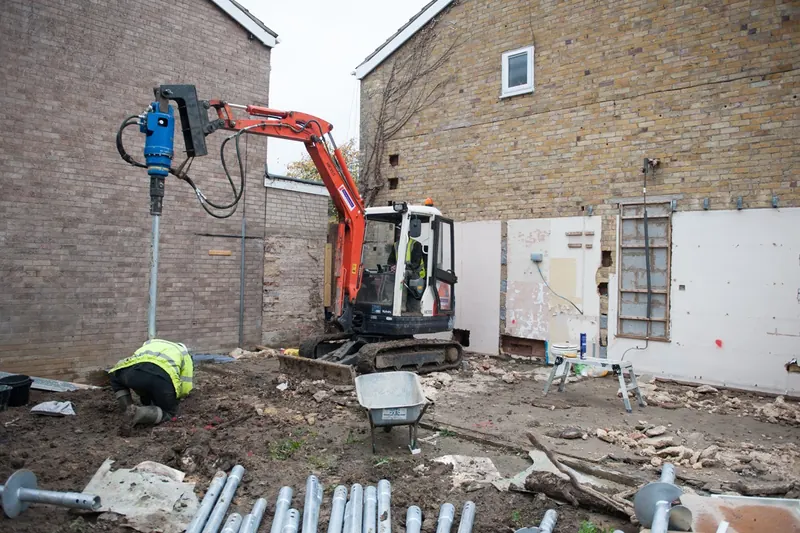
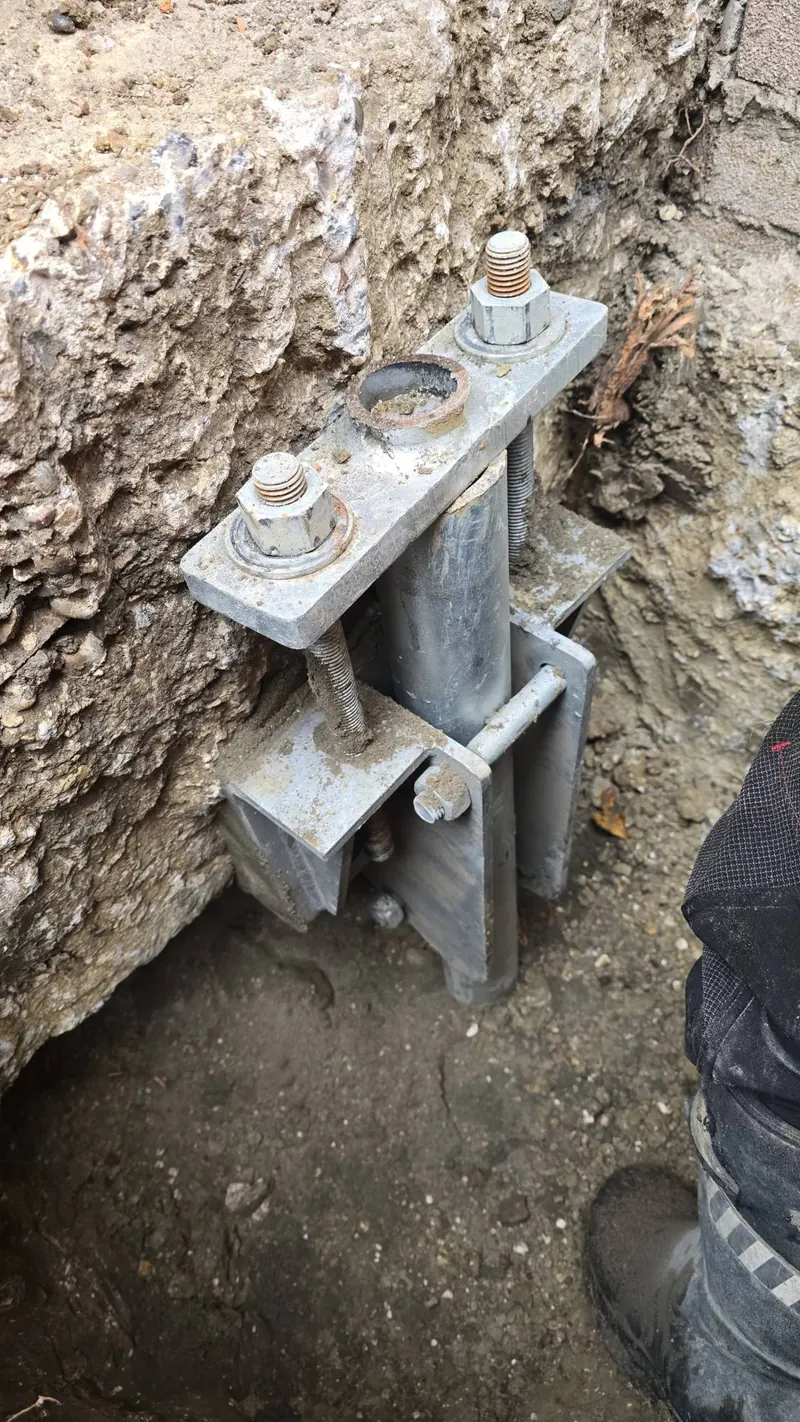
A helical screw pile going in beside a house wall
  • IQNet, the International Certification Network
  • CITB registered
  • ISO 9001 & CE standards

About Screw Piles Ltd

Specialists In Screw Piling For Housing And Garden Rooms

Screw Piles Ltd has spent 40 years putting foundations under homes, extensions and garden buildings, and under plenty of commercial structures too. We are a specialist contractor, so the design, the equipment, the materials and the installation all come from one experienced team.

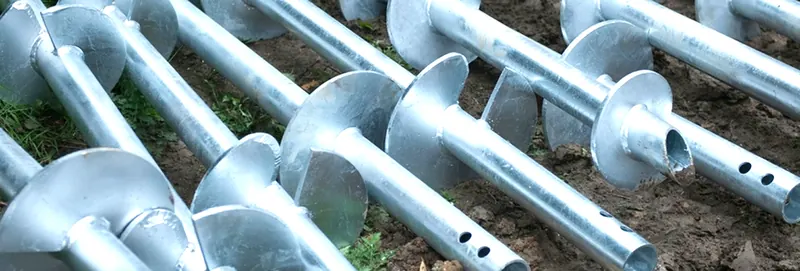
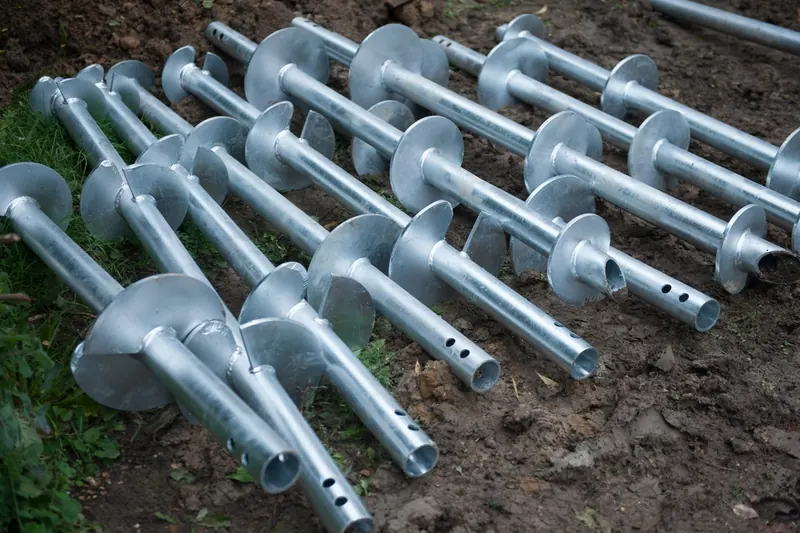
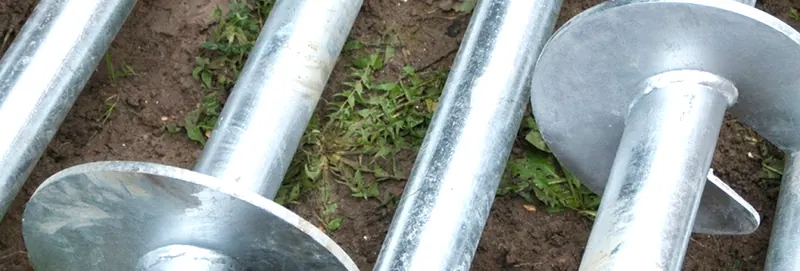
A screw pile (you may also hear helical pile or anchor pile) is a galvanised steel shaft with helix plates that is screwed into the ground. It is faster and cleaner than digging and pouring concrete, there is no vibration, and it can go in right beside an existing building. Our screw piles are built to the highest standards, to ISO 9001 and CE standards, and many of our customers come back to us for their next project.

Most of our work is in London and the South East, including Surrey, Kent and Essex, and across East Anglia, Bedfordshire and Lincolnshire. We cover the rest of the country too, so wherever your site is, ask us.

What we do

One Team For Homes And For Commercial Sites

Whether it is a garden room at the end of the lawn or a grid of piles under a silo, you get the same complete package: design, equipment, materials and installation.

For homeowners & builders

Residential screw piling

Foundations for extensions, garden rooms, garages and conservatories, plus underpinning for homes that have moved. Compact equipment, tidy sites and very little disruption for you or your neighbours.

  • House extensions
  • Garden rooms & offices
  • Underpinning
  • Conservatories & garages
Residential piling

For contractors & engineers

Commercial screw piling

A complete foundation package for commercial work: helical screw piles designed for heavier structural loads, with the reinforced concrete ground beams and rafts that sit on top of them.

  • Temporary structures
  • Contaminated ground
  • Utilities & civil engineering
  • Signage, highways & rail
Commercial piling

Two types of screw foundation

Screw Piles Or Ground Screws?

They can look alike, but they do very different jobs. Here is how to tell which one your project needs.

For heavier structural loads

Helical Screw Piles

A galvanised steel shaft with helix plates, screwed down to firm ground by a hydraulic torque head on a mini digger. Each pile is designed for the structural load and its capacity is verified as it goes in.

  • New build homes
  • House extensions
  • Underpinning
  • Larger garden rooms and garages
  • Commercial and industrial structures

Built to the highest standards, to ISO 9001 and CE standards.

Screw piles for homes

For lighter structures

Ground Screws

A smaller threaded steel screw, quick to install with compact equipment. There is no digging and no concrete, and the screw can take its load straight away.

  • Sheds and summer houses
  • Decking
  • Smaller garden rooms
  • Fencing, gates and carports

Not sure which you need? Send us the details and we will advise.

About ground screws

How it works

How A Screw Pile Goes In

Four stages take your site from drawings to a foundation that is ready to load.

  1. Engineering and design verification

    Working directly from your architectural and structural drawings, alongside local borehole and soil data, our engineering team calculates precise pile positions, target depths and load specifications.

    • Drawings
    • Soil data
    • Load specification
  2. Displacement installation

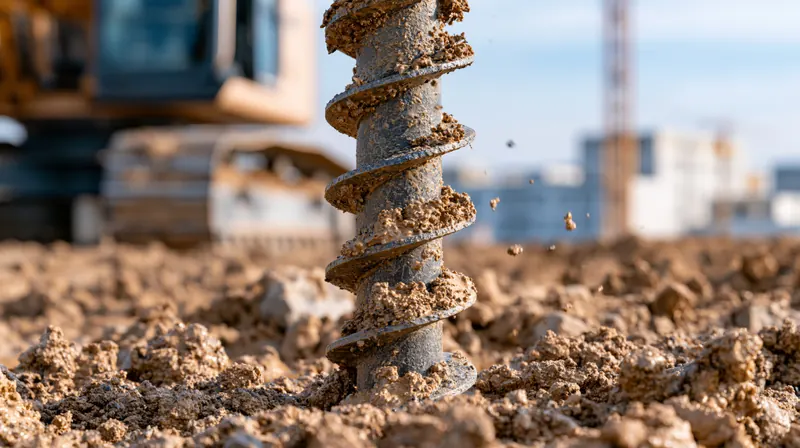
    A low-speed, high-torque hydraulic drive head on a compact excavator rotates each galvanised steel helical pile into the substrate at 6 to 10 rpm. As a true soil-displacement method, it involves no excavation, generates no spoil and is entirely vibration-free.

    • 6 to 10 rpm
    • Zero spoil
    • Vibration-free
  3. Real-time torque monitoring

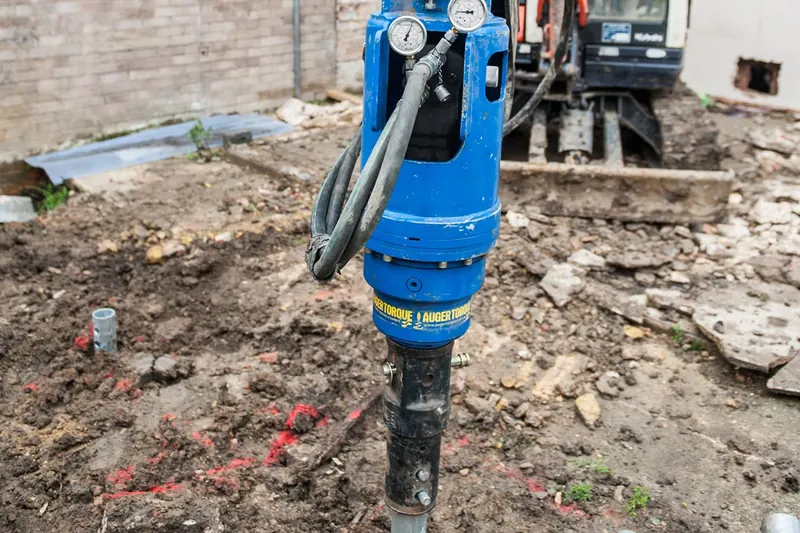
    Calibrated pressure gauges monitor installation torque continuously as the pile advances. Because torque correlates directly with geotechnical load capacity, the bearing capacity of every pile is verified in real time against the design criteria.

    • Verified on every pile
  4. Immediate structural loading

    Once the target depth and torque threshold are reached, the foundation can take structural loads straight away. Unlike poured concrete there is no curing time, so follow-on trades can start building immediately.

    • No curing time
    • Immediate loading

Why screw piles

Why Choose Screw Piles Over Concrete Foundations?

Screw piles work in compression and in tension, and because there is no concrete to place they can be installed in any weather.

Blue hydraulic torque head driving a screw pile into a marked-out foundation position

No spoil, lower cart-away costs

The soil is pushed aside rather than dug out, so there are no muck-away skips to pay for. On contaminated ground that can mean big savings on landfill charges.

A faster turnaround

No waiting on concrete lorries, pumps or days of curing. Piles can take their full load the moment they are in.

Quiet, with no vibration

Ideal beside party walls and on built-up streets: very little noise, and no vibration to put the buildings next door at risk.

Fits through a side gate

Compact equipment reaches back gardens and tight plots, usually without taking down fences.

Works where digging struggles

A cost-effective answer in soft clay, sand or collapsing ground, especially where a high water table floods trenches.

Twin pressure gauges on a hydraulic torque head, used to verify the load capacity of each screw pile

Load checked on site

Torque gauges confirm how much each pile will hold, pushing down and pulling up, as it goes in. No guesswork.

  • Lower carbon footprint
  • Easy to remove, ideal for temporary use
  • Installs close to existing structures
  • Can be installed at up to 45°
  • Goes in whatever the weather

Recent work

On Site With Screw Piles Ltd

Photos and video from our sites. Choose any picture to see the full gallery.

View the gallery and video

Questions & answers

What People Ask Us Most Often

If your question is not here, see all our FAQs or give us a call. We are happy to talk a project through before you commit to anything.

0330 043 3216

How do screw piles work?

Each steel pile is screwed down into firm ground by a hydraulic torque unit on a small digger. Once it reaches the depth and the load it needs, it stays in place. If extra stiffness or corrosion protection is specified, the hollow shaft is then filled with a strong cement grout. Because the equipment is compact, piles can go in right next to an existing building.

How long does it take to install a screw pile?

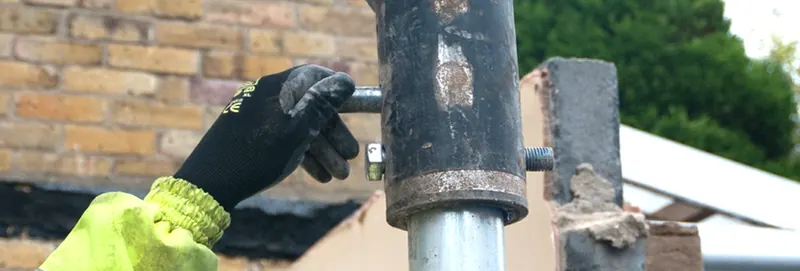
Piles are normally installed with a mini excavator carrying a low-speed, high-torque hydraulic drill head, turning at 6 to 10 rpm. An extension section takes about a minute to attach, and a 6 m installation should take no more than 30 minutes. Typically only an operator and one assistant are needed. Where access is difficult, smaller capacity piles can be installed with hand-held equipment.

What load can a screw pile carry?

Our standard residential and light commercial piles carry safe working loads of between 75 kN and 175 kN each (roughly 7.5 to 18 tonnes), depending on the ground and the pile chosen. The load is checked as each pile goes in, and it can be applied straight away. In clay soils, a pile's grip on the ground actually increases a little over time.

How much mess and disturbance should I expect?

Very little. Installation produces no soil cuttings, so the site stays clean and there is less to dispose of. Noise levels are low and there is no vibration. The equipment has a small footprint, so adjacent structures are barely disturbed.

Are screw piles a sustainable choice?

Screw piles are made from high-quality recycled steel, which conserves natural resources and energy and reduces the overall carbon footprint. They can also be removed and reused with little or no change in structural integrity, so they do not have to be abandoned at the end of their use.

Where did screw piles come from?

They were introduced as a practical foundation by Alexander Mitchell (1780–1868), an Irish builder and brick manufacturer. Cast iron screw piles went on to support lighthouses and more than 25 pleasure piers built during the 19th century, Brighton and Bournemouth among them. In the 1970s smaller-diameter helical piles arrived that could be installed with modern hydraulic equipment, and today they are used across road, rail and telecommunications.

What is the difference between a screw pile and a ground screw?

A helical screw pile is a structural foundation for heavier loads: new build homes, extensions, underpinning and commercial buildings. A ground screw is a smaller screw for lighter structures such as sheds, decking and smaller garden rooms. See ground screws for more, or ask us which suits your project.

Which areas do you cover?

We offer nationwide coverage. Most of our work is in London and the South East, including Surrey, Kent and Essex, and across East Anglia, Bedfordshire and Lincolnshire. See the areas we cover, or call 0330 043 3216 with your site's postcode.

Request a quote

Ready To Talk Foundations?

Send us a few details about your project, or pick up the phone. We are open Monday to Saturday, 9am to 5.30pm.

Tell Us About Your Project

A phone number or an email address is fine, whichever suits you.

Got drawings or site plans? Email them to us or send them on WhatsApp.

We use your details only to reply. See our privacy policy.